
Root Fracture – A Diagnostic Dilemma
Root fractures in root-filled teeth cause pain, swelling, and fistula formation, often detected via X-rays and deep pockets. Common in molars and premolars, with increased risk from posts or biomechanical factors. Diagnosis requires inspection and measurement; treatment is usually extraction.
Table of contents
This article is based on an original article in Swedish which can be found here
Original text authored by: Johan Warfvinge
BACKGROUND
It is not uncommon for endodontic treatments to fail due to root fractures. The patient may experience a range of symptoms, from mild tenderness to swelling and pain. Common findings include tenderness upon biting as well as percussion and palpation. Fistula formation may also frequently occur.
Root fractures in root-filled teeth occur with a frequency between 4% - 32%. The fractures are usually noted some time after the treatment has been performed, on average after about 5 years. Molars in the mandible and premolars in the maxilla are the teeth most often affected.
On radiographs, a widened periodontal ligament around the root is typically seen, extending up to more than half the root height. For better diagnostics, two radiographic projections may be useful.
CBCT is rarely indicated as the risk of false positive findings is high. This is due to root filling materials and posts creating artifacts in the image that can be interpreted as root fractures.
The fracture usually starts marginally, but can also begin apically (see image 1 and 2) or, in more unusual cases, in the middle of the root.
If the fracture starts marginally, a localized deep periodontal pocket often develops.
If the fracture starts further apically, it may be more difficult to diagnose clinically, and in these cases, radiographs rarely provide any information about the diagnosis.
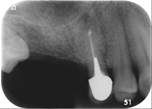
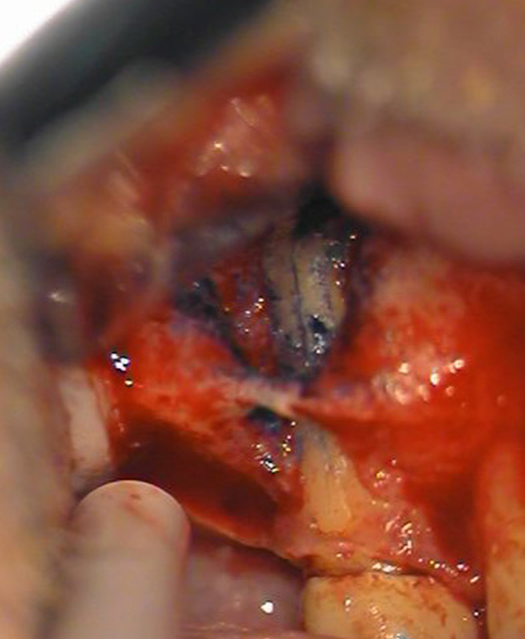
Teeth with posts tend to fracture more often, but even teeth without posts can fracture. A root-filled tooth that has healed apically, but where problems arise after a few years, often raises suspicion of a root fracture.

