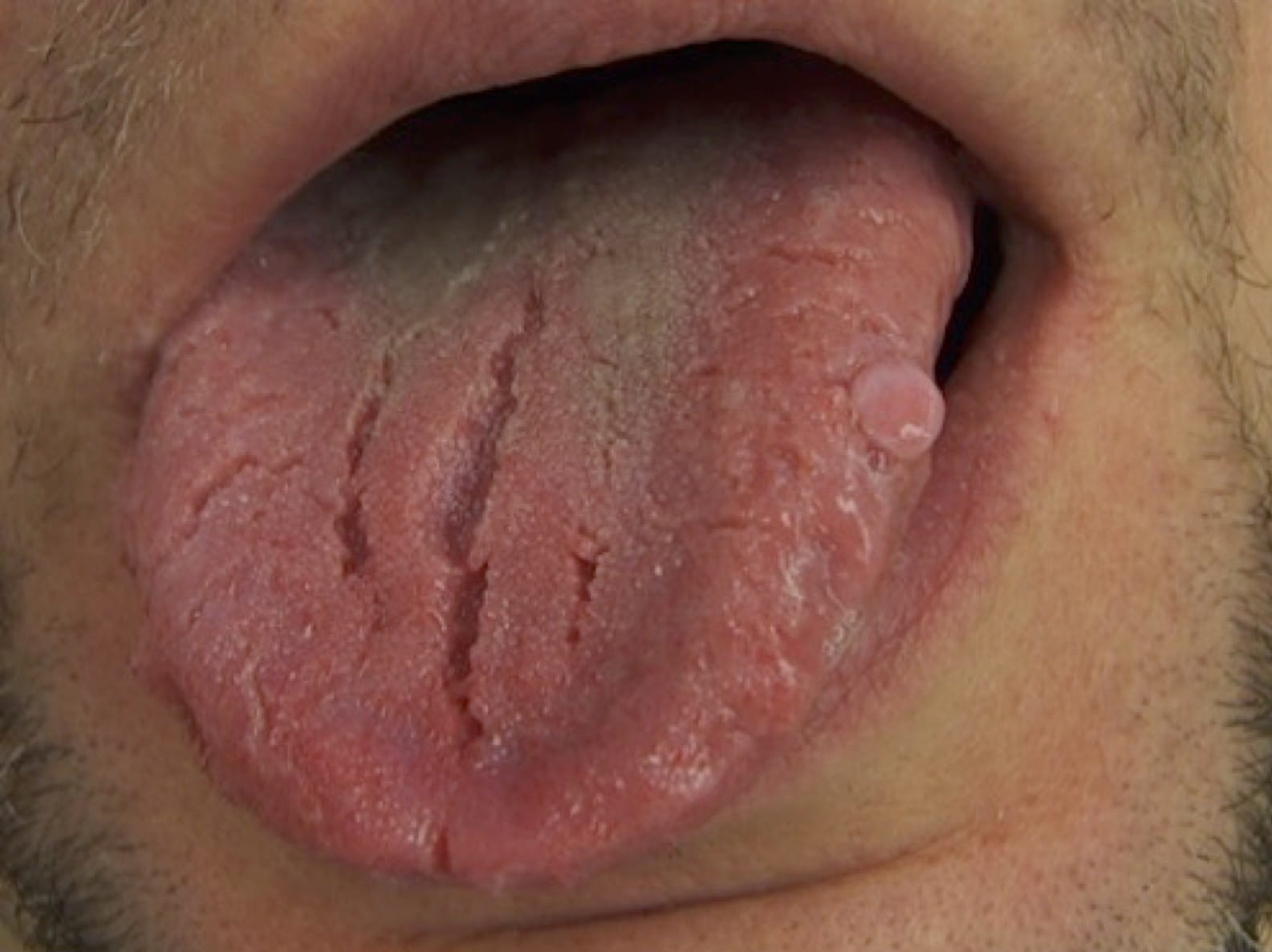
Reactive Neoplasms
Benign mucosal lesions, such as irritation hyperplasia and pyogenic granuloma, often arise from chronic irritation. The prevalence of mucosal hyperplasia is 19%, and pyogenic granuloma is 1%. Treatment includes excision and removal of triggering factors. Prognosis is good, but recurrence may occur.
Table of contents
This article is based on an original article in Swedish which can be found here
BACKGROUND
A common referral issue in oral medicine is benign mucosal lesions.
The oral mucosa is often exposed to recurrent or chronic irritation in the form of plaque, calculus, repeated biting, poorly fitting dentures, or excess filling material. This can lead to reactive lesions.
Causes
Excessive tissue response to trauma/chronic irritation.
FIBROEPITHELIAL/FIBROUS MUCOSAL HYPERPLASIA, IRRITATION HYPERPLASIA
- Painless, sometimes tumor-like
- Soft or slightly firmer than surrounding mucosa
- Broad-based or pedunculated, sometimes lobulated hyperplastic lesion
- Localized to the ventral tongue, buccal mucosa, or the inner surfaces of the lips in areas that are easily traumatized during chewing
- In connection with poorly fitting removable dentures
- Normal-colored or slightly paler than surrounding tissue. Composed of relatively avascular fibrous connective tissue
- Covered by normal mucosa which may sometimes be ulcerated
- Rarely larger than 1-2 cm
- Often solitary
Treatment
If applicable, radiographs should be obtained to assess underlying bone and teeth. Excision and histopathological examination.