
Prosthetic Implant Complications
Prosthetic complications can occur with implants. Common issues include loose screws, veneer fractures, implant misalignment, and phonetic problems. Proper patient selection, precise fit, and regular follow-up reduce risks.
Table of contents
This article is based on an original article in Swedish which can be found here
FAILURE ANALYSIS
In the event of any complication, one should try to determine why this has happened and address the underlying cause before treating/reparing. Document with X-rays and, if applicable, with photos.
So, for example, do not just uncritically screw in a dislodged implant bridge or a single crown, but first try to find the cause of the dislodgement. Complement with a detailed journal entry.
Possible causes for dislodgement may include:
- unfavorable placement of the implants
- too many extension joints
- poor occlusion
- the patient is a heavy biter
- insufficiently tightened or incorrect screws (not original)
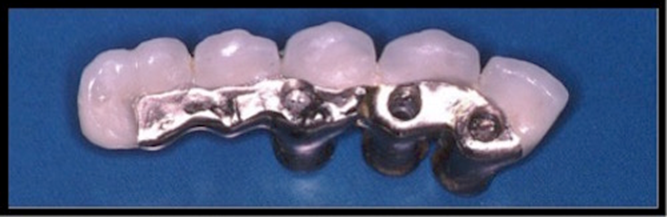
Inhalation Risks
Occasionally, items are unintentionally dropped in the mouth. If a patient is lying down with their head tilted back, the airways are open directly down to the lungs. There is a risk of dropping even a screwdriver into the bronchi. Usually, dropped objects end up in the stomach, but this is not always certain. Therefore, an X-ray referral is recommended if you are not sure where the object/screw has ended up.
With the help of X-rays, the location of the object can be determined, after which, ideally, an ENT specialist can retrieve the object/screw. If not, a lung operation may be required where a piece of the lung is removed along with the screwdriver. Thus, it is preferable to treat the patient sitting and have good assistance in critical situations. It is also wise to prevent inhalation with a gauze in the throat. Check beforehand with the patient about their gag reflexes? Test the reflexes physically as well!
Alveolar Growth
In some individuals, alveolar growth occurs even in adulthood, well past the age of 20. This means that ankylosed teeth, bridges, and implants (which are essentially ankylosed) do not keep up with growth. Even tooth-borne bridges do not follow the alveolar growth!
If a single implant is placed in the anterior region, it will, more or less noticeably, appear shorter. The only way to correct this is to make a new longer crown the day the patient is disturbed by the length difference. A simpler procedure if the tooth crown is screw-retained.

